
Records in a Richmond Resident Lookup
No public master list of Richmond residents exists. Each record answers one narrow question. A parcel record can tie a person to ownership or a mailing field. A deed names the parties to a dated transfer. A court index proves that a filing, hearing, or disposition exists. Directories, newspapers, cemetery files, and Chancery causes each supply a dated historical association. Start with the source that matches the fact you already hold, then check it against an independent record before concluding anything.
| Record | What It Confirms | Where | Access |
|---|---|---|---|
| Parcel and deed record | Property identifier, recorded ownership role, transfer reference, and date | Richmond Assessor, Parcel Mapper, and Circuit Clerk | City portal routing; clerk copies and remote land access have separate routes |
| Court index | A filing, hearing, charge, or disposition in the named court | Virginia OCIS or the Richmond clerk | OCIS is free but selective; the clerk holds fuller local files |
| Voter status | The user’s own registration status, districts, and polling place | Virginia Citizen Portal | Personal self-check, not a public name search |
| Vital record | A birth, death, marriage, or divorce record when access rules are met | Virginia Department of Health | Age-of-record and requester eligibility control access |
| Directory or archive | A person, role, and place at a stated historical time | Richmond Room and Library of Virginia collections | Online, on-site, microfilm, and repository-specific routes |
For a current property question, begin with the City's assessor routing. Keep the parcel ID handy. Keep the legal description and map location too. An older Richmond address or person calls for dated directories and archives first. A known legal matter should preserve the court, case number, date, and disposition. Richmond has no county government. So a record labeled “Richmond County” needs a locality check. No one should treat it as a City record before that check is done.
Note: A name in a record marks a recorded role and date. It does not always mean a current Richmond occupant.
Richmond Resident Lookup Requires Dates
Same-name matches are common in Richmond records. The dependable anchor is a combination of name variant, place, record role, and event date. One person may appear as a grantor in a deed. Another may be an heir in a Chancery file. The same name might mark a witness in court, an applicant on a permit, a decedent in a cemetery record, or a contact for an organization. Those labels prevent overreach. For earlier periods, copy the address exactly as printed. Normalize it only afterward. Richmond street names, wards, old Manchester references, parcel boundaries, and postal labels all change over time. The Richmond Directory Book is the better route for a dated directory entry, an old street section, a yearbook, or a local-history lead.
- Record the name exactly as displayed, plus any initials or spelling variants.
- Keep the source date separate from the date it was retrieved.
- Label the person’s role rather than treating every named party as a resident.
- Use a parcel ID or case number when the portal supplies one.
Richmond Chancery Family Links
For a historical name, a Chancery cause can supply family context. A parcel card cannot. The Library of Virginia Chancery Records Index opens the door. Files may involve widows, children, heirs, wills, and plats. Testimony and property disputes appear too. Richmond City images for 1783 through 1879 were expanded in 2025. A file can name a relationship or an earlier address clue. Still, the printed role and date should stay attached to every note. Search by locality and surname. Then inspect the scanned file instead of trusting an index line alone. Compare a Chancery heir or witness against a dated deed, directory, or obituary. Then check the census record or probate file too. That matters when a record gives only a name.
Richmond Resident Lookup in OCIS
A Richmond resident lookup in the official Online Case Information System, called OCIS, opens with an acknowledgement screen. Three modes follow. Name mode needs two characters and accepts partials. Court level can stay at All Courts or narrow to Circuit, General District, or J&DR, then to a single court name. Case-number mode requires one specific court, while hearing-date mode takes an MM/DD/YYYY date with optional time controls and a court selection. The official OCIS search help explains each search mode.
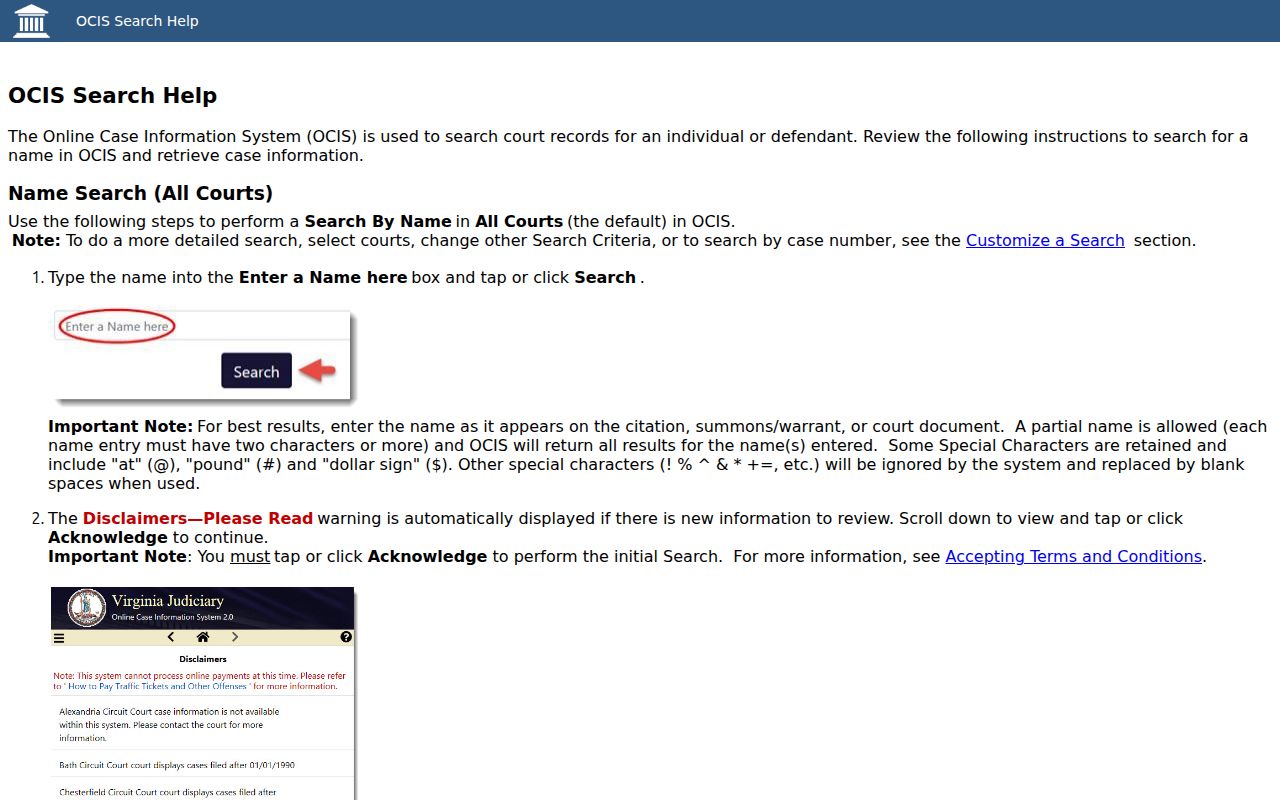
Match the mode to the record in hand. Guessing at a case-number format wastes time. OCIS results can display court, case number, defendant, offense date, hearing date, charge, and code section. Detail screens can add appeal, hearing, disposition, and service-of-process information. The system is not a complete archive. Many juvenile and protected matters fall outside it. Note the portal limitation notice, then contact the appropriate Richmond clerk when a complete file or certified copy is needed.
| Result field | What to preserve |
|---|---|
| Court and locality | The court that supplied the result, including Richmond selection when used |
| Case number | The stable case identifier for a clerk request or later check |
| Party and role | The displayed defendant or party label, without assuming identity from name alone |
| Dates and charge | Filing or offense date, hearing date, charge, and code section when shown |
| Disposition and limits | The stated outcome, retrieval date, and any portal restriction notice |
Richmond Court Lookup Routes
Outside OCIS, each Richmond matter sits with its court. Richmond Circuit Court sits in the 13th Judicial Circuit. General District Court and Juvenile and Domestic Relations Court operate as separate local courts. The Richmond Circuit Clerk holds public civil and criminal files, dockets, deeds, wills and estates, marriage licenses, UCC filings, and other instruments. Federal matters follow the Eastern District of Virginia route. They are not part of OCIS. Choose the local court before any party, case-number, or hearing-date search. The Virginia General District Court selection screen is the starting point for that choice.
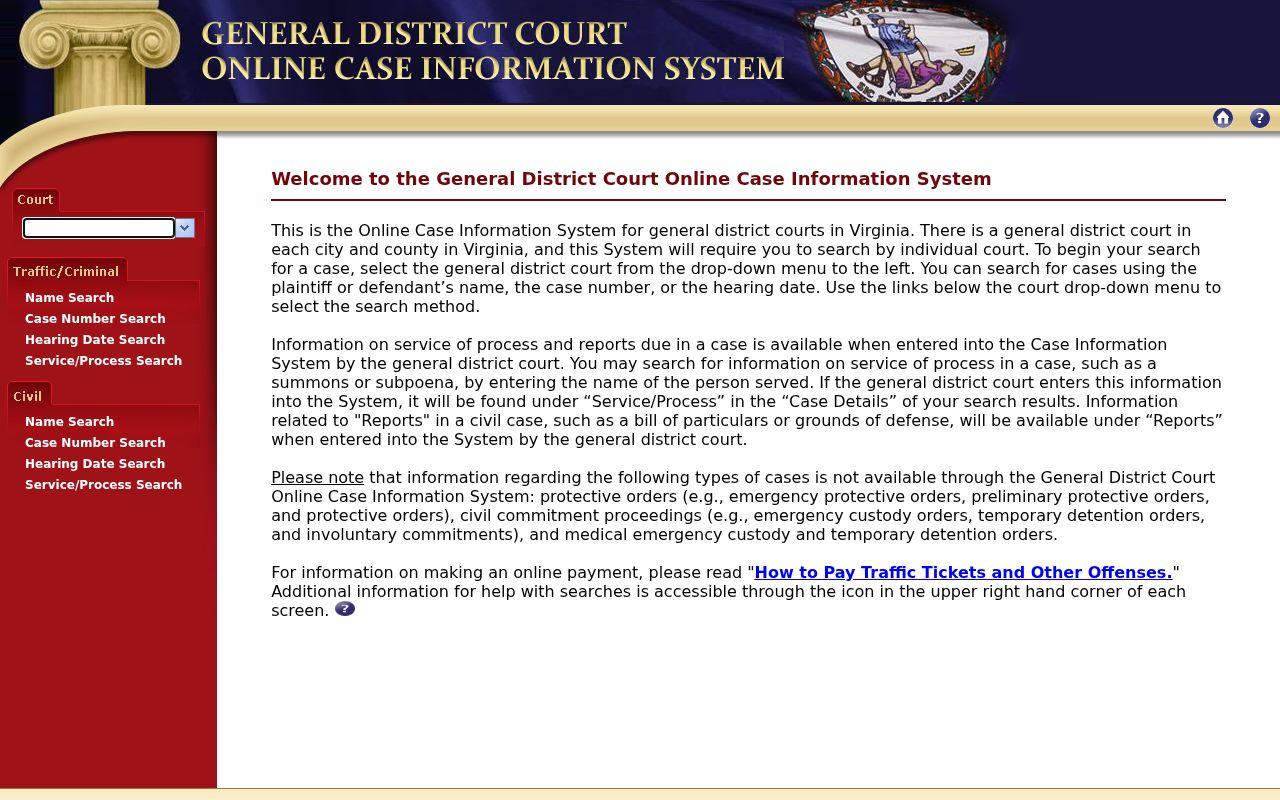
Pick the locality before anything else. Virginia has many courts. A party name that looks like a match can belong to an entirely different docket. Narrowing to Richmond first keeps a court result tied to the right city. Custody questions follow the same discipline. The Richmond City Sheriff runs a local inmate search. The state VADOC Inmate and Supervisee Locator covers only people under VADOC authority. It also carries its own disclaimer. Neither tool proves where someone lives, and neither settles any question about conduct. The VADOC locator shows that disclaimer and a blank search form before any record appears.
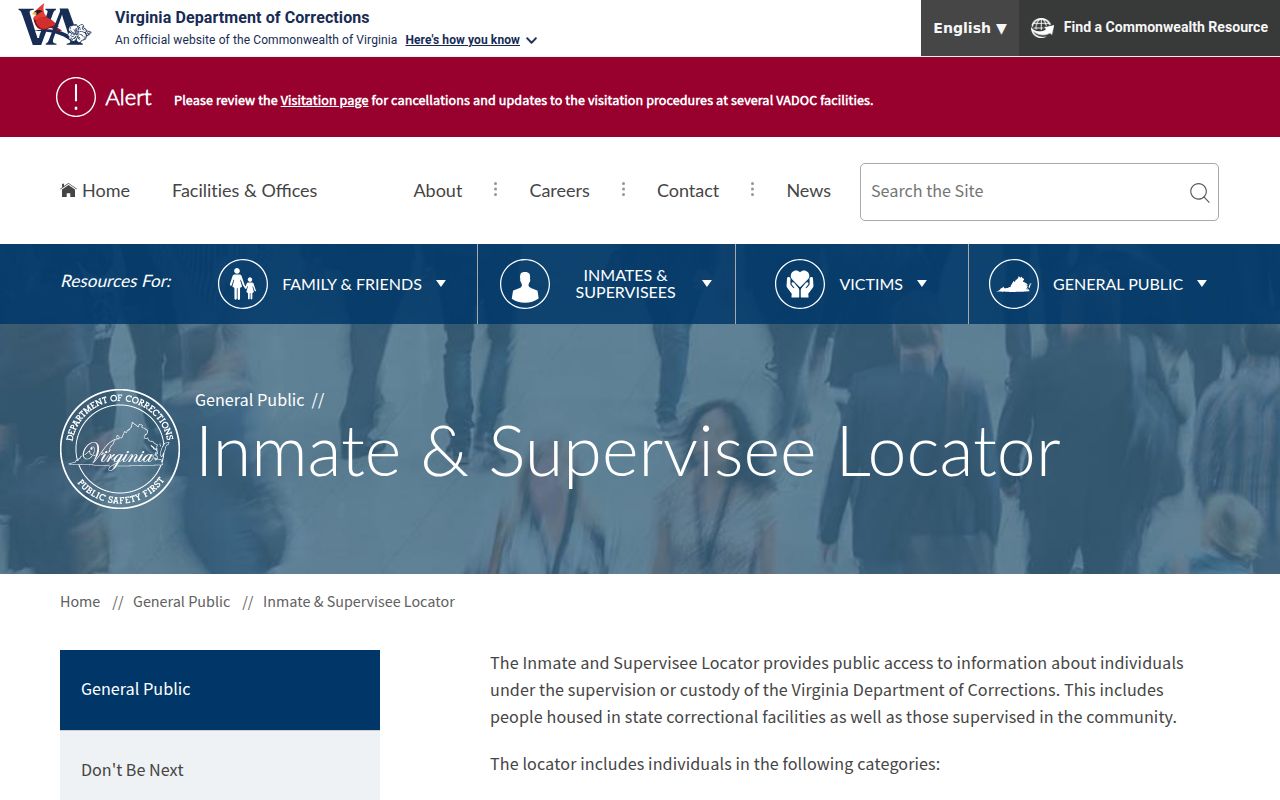
Keep the source, date checked, and the locator’s warning with any result note.
Richmond Resident Lookup Property Links
Richmond property tools connect an address with a parcel. They do not prove who lives there. The assessor's owner-name search went away in 2017. Address and parcel filters are now the practical starting point, with the Parcel Mapper, deed index, and permit portal following. The City also cautions that one primary assessor address can sit beside several utility or emergency addresses in its Central Address Database. So a single parcel can produce multiple address clues without identifying an occupant.
The city's GIS and mapping materials cover parcel changes, road and alley closings, subdivisions, and map layers. One wrinkle matters: a split recorded by deed may not reach the assessment system until the next year. Keep the parcel ID, legal description, property address as shown, transfer reference, map link, and retrieval date together. For land records, the Richmond Circuit Clerk deed search and its remote-access route lead either to the indexed instrument or to the clerk's copy process.
Note: A mailing field, a transfer party, and a permit contact each fill a different role in the record.
Verify a Richmond Resident Record
One source is never enough. Matching the wrong person to a Richmond record is easy when names repeat. Start with the most specific Richmond detail on hand. Then compare only facts that each custodian actually publishes. A court name match should be held against court, case number, date, and disposition. Only then does it mean anything. A Richmond historical directory result deserves a second dated source too. That second source could be a newspaper, census, deed, probate file, or archival image. Two independent records in agreement beat one record standing alone.
- Write down the known name, approximate year, locality, and any address, parcel ID, or case number.
- Search the relevant official or archival custodian and keep the exact displayed role and record date.
- Find a second source that independently connects the same person to the same time or place.
- Request a clerk, archive, or vital-record copy only when the custodian’s access rules permit it.
- Docket
- A court’s running case record, which can list filings, hearings, and dispositions.
- Index and image
- An index points to a record; an image is the scanned or copied document itself, when the custodian makes it available.
- Certified copy
- A copy issued and authenticated by the records custodian for the purpose allowed by that office.
Richmond Vital Records for Lookup
Virginia's Department of Health Office of Vital Records holds Richmond birth, death, marriage, and divorce records for the state. Access depends on two things. One is the record's age. The other is your relationship to it. Birth records open to the public after 100 years. Death, marriage, and divorce records open after 25, subject to the applicable rules. Restricted records fall back on immediate-family and documented legal-representative provisions. Treat Richmond historical indexes as leads rather than certified proof of current identity. The VDH vital-record forms page is the starting point. It covers the application route and field requirements.
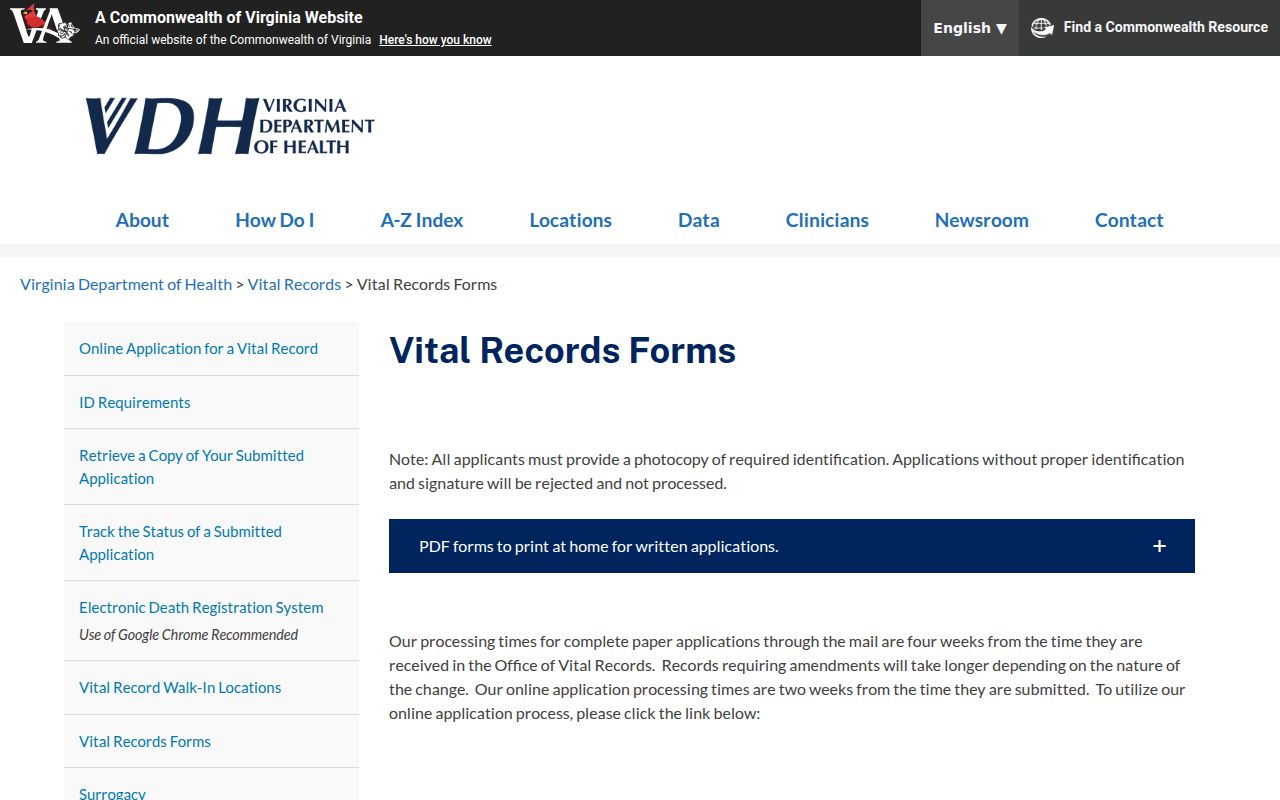
Confirm the live form and route before applying, since processing guidance varies among current materials. Virginia's July 2026 HB301 notice is significant here. Adult adoptees born in Virginia may now act. The notice says they may request an original birth record with no court order, subject to identification and fee rules. The VDH HB301 notice also lays out birth-parent contact-preference options. For the 1896 to 1912 gap, or when a request does not qualify, historical alternatives exist. Richmond microfilm, marriage registers, church and cemetery sources, newspapers, probate, and local-history repositories all can help.
Richmond Voter Lookup Is Personal
Virginia's Citizen Portal serves the voter, not the public. For a Richmond voter it works as a personal registration and status check, requiring name, date of birth, the last four digits of a Social Security number, locality, and a certification checkbox. Once those private values go in, it returns status, polling place, districts, absentee status, and voting history. That makes it a private tool, not a public Richmond resident lookup by name. Never save those submitted values in a public note or screenshot.
Registered-voter lists and lists of people who voted face separate statutory limits under Va. Code §24.2-405 and §24.2-406. Authorized list products go only to listed requester classes for listed purposes. Recipients may not publish a list online or load it into a searchable database. Richmond's Elections office handles election-record requests and current routing questions.
Richmond License Lookup Is Not Residence
A business license tells you about an organization. It does not tell you where a person lives. Richmond license and business records can confirm a credential or an entity. Residence, however, requires a different dated source. The Virginia State Corporation Commission's CIS starts from an entity name or entity ID. It can display organizational status, registered office, principal office, and management fields. A registered office belongs to the organization record. It does not support any Richmond residential conclusion.
The DPOR License Lookup offers name, license number, location or ZIP, board, and license-type filters. Results can show status, dates, DBA information, and address fields. DPOR does note its online data are not the complete public record. Use these tools to confirm the stated organization or credential. Then reach for a separate dated source whenever a Richmond resident connection matters.
Limits on a Richmond Resident Lookup
A Richmond residents directory works best when you ask the smallest question that answers it. Keep full birth dates, Social Security data, medical details, driver-record numbers, and unnecessary contact information out of anything you publish. The same care applies to juvenile records and sealed material. Virginia's Address Confidentiality Program gives qualifying survivors a substitute address. That substitute must never be traced back to a real home. Protecting that shield is part of doing a responsible resident lookup.
Virginia FOIA can open City records that the portal does not already carry. It cannot override vital-record eligibility rules or unlock protected information. A street directory request built on FOIA still respects those walls. A good request names the record type, the date range, a parcel or case number, and the custodian, plus your preferred format. The City takes FOIA requests through several channels. Ask too broadly, though. The request may be narrowed or sent to a different office.
Lawful use. Use Richmond records for lawful personal research, genealogy, heirs, civic transparency, or scam verification. Stalking, harassment, and attempts to expose protected addresses are prohibited.
Suspicious document? Suspicious payment demand? Use the contact route listed on the official custodian's own page rather than any number in the document itself. A court image is not proof on its own. Without the court, case number, date, and disposition, a claim resting on that image cannot be verified, so treat it as unconfirmed. Report only the narrow fact the source actually supports, and say so with its date and its limits.